
The water cycle in six easy steps
Remember: rises → gathers → falls → flows → soaks in → returns.
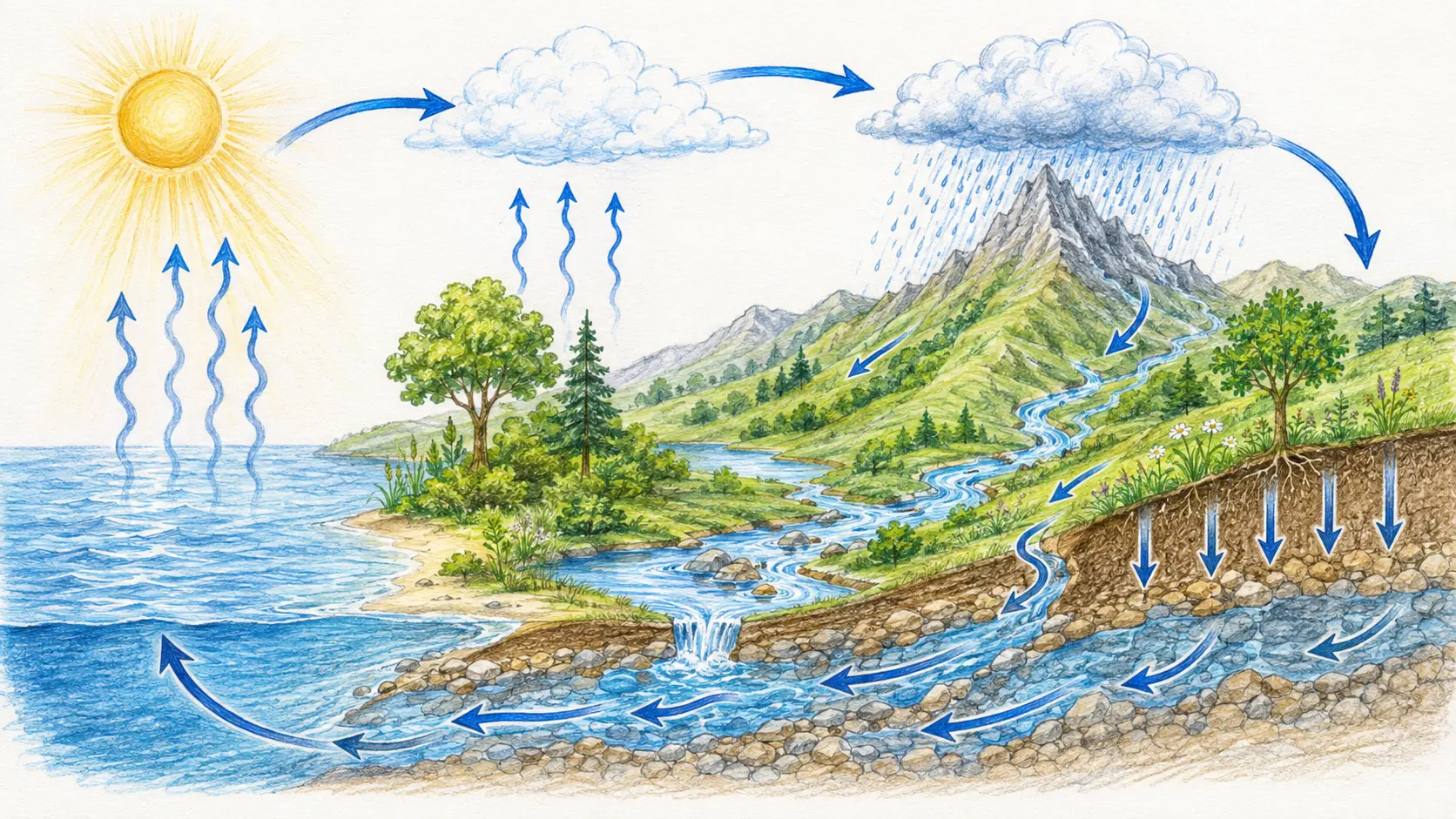
- 01→
Rises
Sunlight turns water into vapour. Plants also release water vapour.
- 02→
Gathers
Vapour cools into tiny droplets that form clouds.
- 03→
Falls
Water returns as rain, snow, or hail.
- 04→
Flows
Water travels across land into rivers, lakes, and the sea.
- 05→
Soaks in
Some water enters soil and replenishes groundwater.
- 06
Returns
Groundwater, rivers, sea, and plants feed the journey again.
Clean-looking water is not automatic proof that it is safe to drink.
Imagine water as a traveller going around and around
The Sun warms water in oceans, rivers, lakes, soil, and plants, turning some of it into vapour that rises. In cooler air, the vapour gathers into tiny droplets and forms clouds. When the droplets become heavy enough, water falls as rain, snow, or hail.
Back on Earth, water takes several paths. Some runs into drains, rivers, and the sea. Some soaks into the ground and replenishes groundwater. Plants also take up water and release part of it back into the air. The Sun and gravity keep this journey moving.
Can the water cycle change or go off course?
The water cycle does not stop, but its pattern can change. Warmer air can speed evaporation and contribute to very heavy rain in some places while other places face longer dry periods. Paved areas and buildings make infiltration harder, increasing runoff and flood risk. Tree loss and excessive groundwater pumping also alter how water is stored and moves.
The basic rules remain, but the timing, path, stored amount, and quality can shift. That is why a place can experience flooding and still lack clean water afterwards.
How can water quality become worse?
As water flows or soaks into the ground, it can carry soil, rubbish, oil, fertiliser, pesticides, waste, microorganisms, or chemicals from its surroundings. Floods can wash contaminants into wells and water sources; during drought, pollutants can become more concentrated because less water is available.
Clear-looking water is not necessarily safe. Germs and many dissolved substances cannot be seen. Contaminated water can spread disease, while certain chemical hazards can affect health depending on the substance, concentration, and duration of exposure. A sudden change in colour, smell, taste, source, or post-flood condition should therefore be treated carefully and, for important decisions, checked with relevant testing.
A simple message for children and adults
For children: never throw rubbish into drains or rivers. If water suddenly changes colour, smell, or taste, do not drink it—tell an adult.
For adults: protect the source, maintain tanks and pipes, and choose treatment for the actual risk. Boiling helps address many germs, but it is not the answer to every dissolved chemical. Understand the problem before choosing technology.
Six small habits that protect water's journey
- ✓Dispose of rubbish, oil, medicines, and chemicals correctly—not into drains.
- ✓Use water wisely and repair leaks promptly at home, school, or work.
- ✓Protect trees, open soil, and recharge areas so rainwater can soak into the ground.
- ✓Keep wells, tanks, containers, pipes, and taps protected and clean them on schedule.
- ✓Stop using water for drinking after a sudden change or flood impact until its condition is assessed as safe.
- ✓Test relevant parameters and select treatment around the source, use, risk, and lifecycle.
The ARS perspective
Water is always moving, and risk can appear at every stage—from source and surroundings through storage, treatment, distribution, and point of use. ARS looks at the complete journey so a solution does more than make water look clear: it controls the right risks and enables verification.
Official references
This material provides general education. It does not replace laboratory testing, applicable local requirements, or a professional assessment of a specific water system.