Risk Removal
HPFS KL · HPFS CC · OXYDESConditioning and risk removal address relevant parameters before water is used in a home, business, facility, or process.
 Smart Solutions for Reliable Water.
The ARS water solution architecture
Five technology platforms address technical water requirements. Water Risk Management integrates them to keep decisions, implementation, performance, and service under control.
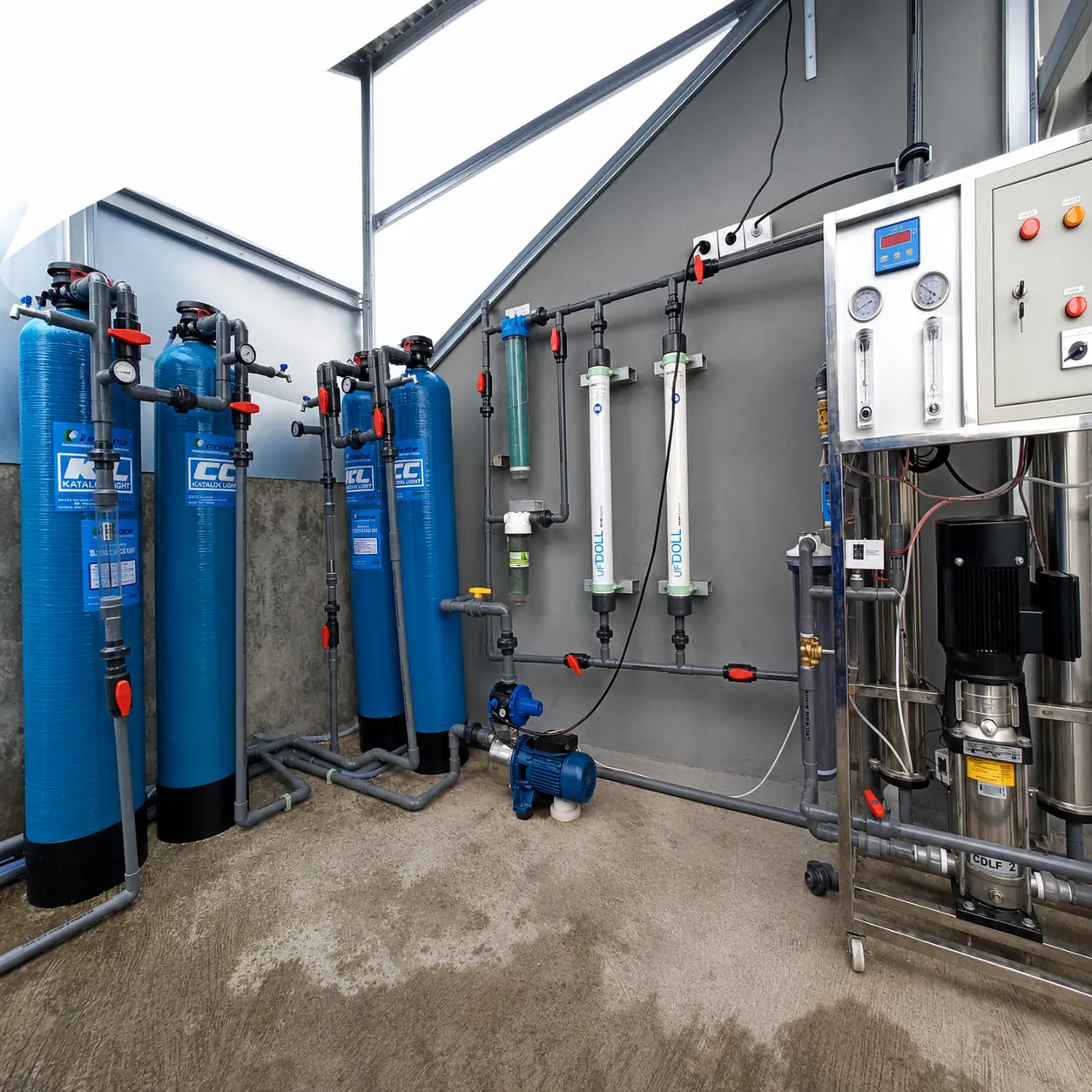 Risk Removal Technology. Not Just Filtration.
Conditioning and risk removal address relevant parameters before water is used in a home, business, facility, or process.
Scale prevention and control protect pipework, heaters, boilers, cooling systems, equipment, and membranes.
Sterilisation platforms for selected applications, configured around microbiological targets, system characteristics, and operating conditions.
Treatment at the relevant point for drinking, cooking, beverages, ice, and public facilities.
Advanced water technology for added water functions in applications supported by study, pilots, and benefit validation.
Integrated management framework
The framework connects water quality, usage requirements, health and asset risks, design, governance, and operational continuity.
Understand the source, use, system condition, available evidence, and target outcome.
Map quality, health, asset, operational, and compliance risks.
Select a relevant combination of technologies and capacities that is practical to operate and reliable throughout its lifecycle.
Structured installation, commissioning, documentation, training, and handover.
Use available data to read performance, changing conditions, and risk indicators.
Maintenance, consumables, corrective action, regeneration, and system improvement.
Lifecycle services
Lifecycle Services is not an additional platform. It is the continuing execution of Water Risk Management after technology is installed.
Installation verification, initial operation, parameters, and handover.
Preventive maintenance and corrective action based on system conditions.
Performance records and evaluation based on available data.
Media, consumables, and scheduled replacement management.
ARS design principle
Raw-water quality, capacity, pressure, installation space, output-water requirements, operational risk, maintenance, media regeneration, and component replacement are considered as one system. ARS looks beyond the initial purchase price to the Total Cost of Ownership (TCO) throughout the system lifecycle.
The right investment is not always the lowest upfront cost, but the one whose costs and risks remain best controlled throughout its use.